
Overview
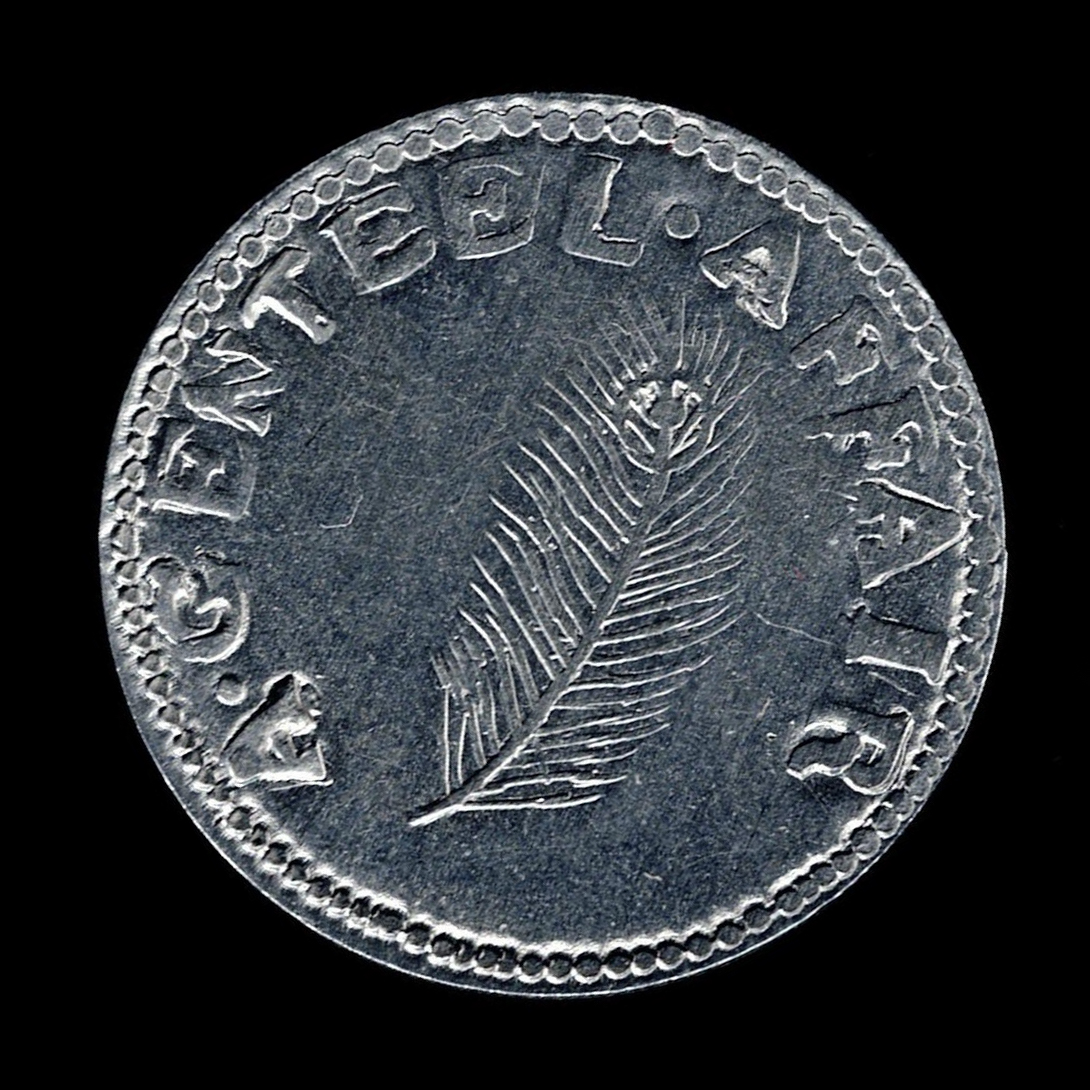
Obverse: “A GENTEEL AFFAIR”, around a peacock feather
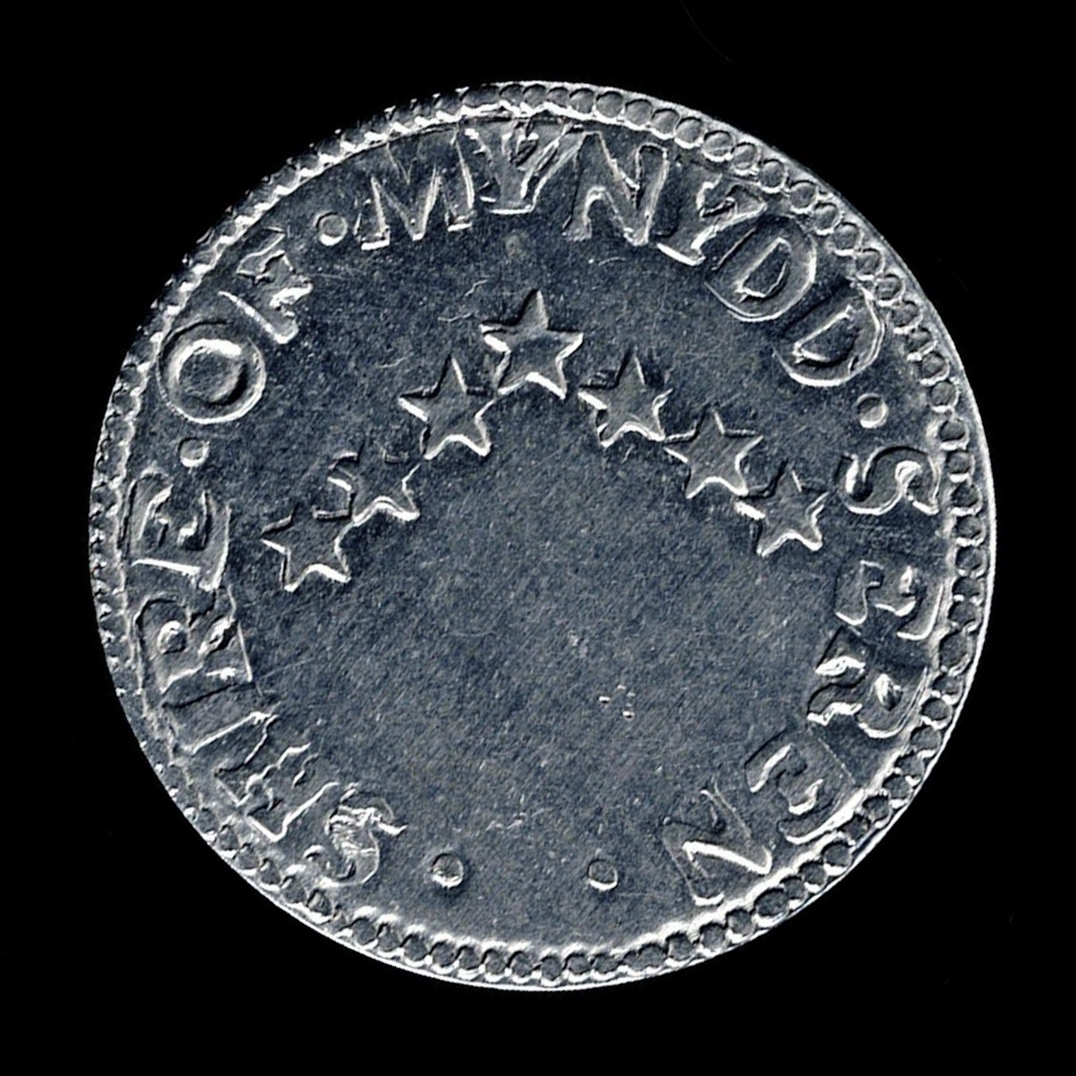
Reverse: “SHIRE OF MYNYDD SEREN”, around populace badge of Mynydd Seren (seven mullets in chevron)
Medium: Aluminum
Technique: Punchwork/Chasing; Engraving; Hammer-struck by hand
Completed: October 2025
Created For: Shire of Mynydd Seren
Utilized At: A Genteel Affair (October 11, 2025), in the Shire of Mynydd Seren
Notes
There wasn’t any specific historical inspiration for this coin. Unless otherwise requested by who I am making them for, when doing site token coins my focus is more on clearly illustrating what the event was over using historical designs.
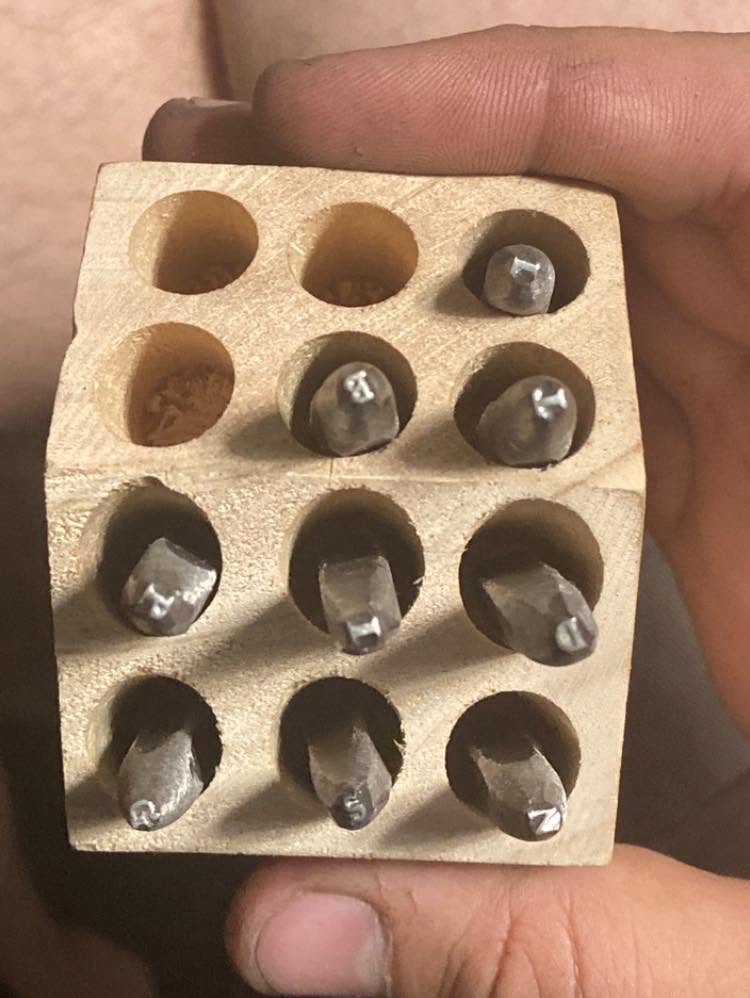
At the time these coins were made, one aspect of my coin making that I had always felt less satisfied with was my lettering. I had a lot of trouble getting my lettering punches lined up cleanly when punching, and until I honed that skill further I was punching or engraving the letters using only lines (such as on the Royal Pound of Wigthegn II and Neassa II). Though it was readable, I was never quite happy with the look. So for this coin, I finally set out to tackle a challenge that had bested me several times before: Master Ian Cnulle’s Punch Matrices.
For those unaware, Master Ian Cnulle (mundane name Gregory Paul Franck-Weiby) was a Legend among the coin making community, both in and out of the SCA. He was the creator of the iconic St. Hildegarde coins (also called “Barak Bucks”), and every moneying laurel I know of at the time of writing this is descended from his lineage.
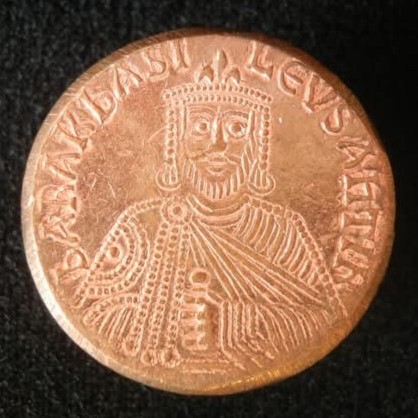
Outside of the SCA, his input was instrumental in the founding of Shire Post Mint, a business that makes incredibly detailed replica coins from various works of fiction (such as Lord of the Rings, Game of Thrones, and Mistborn). He hand-carved the dies of several of their most iconic coins, which are still used today.
His skill in punch work and engraving of coin dies was second to none. To be corny for a moment, he was everything I one day aspire to be as a moneyer. Sadly, Master Ian passed away in 2011. However, before he passed, a series of matrix plates were made from some of his punches. In short, the punches were pressed into a block of steel to impress the image, then the block was hardened. This allows an unhardened punch blank to be struck into the impressed image, which leaves an outline on the surface.
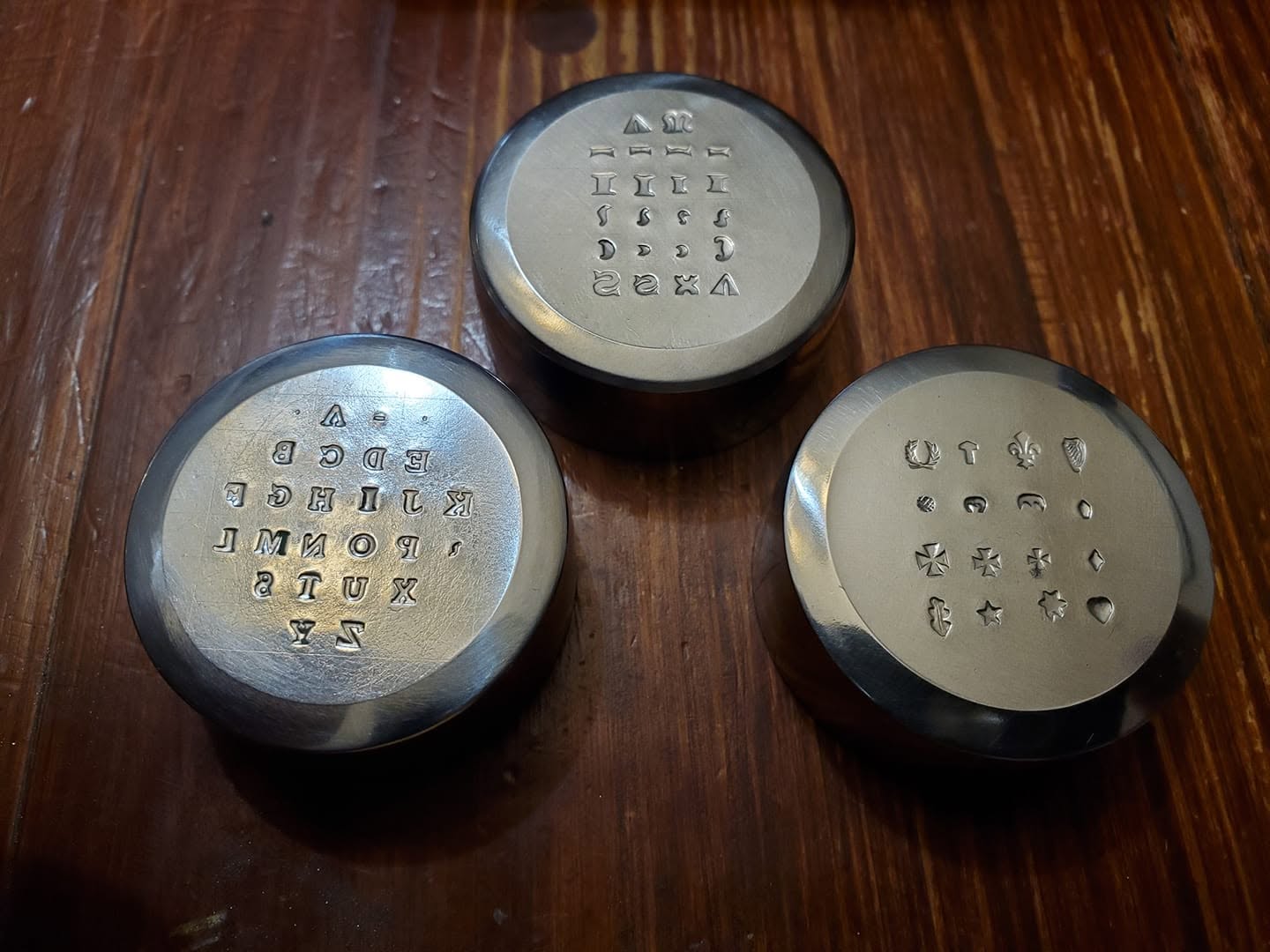
(Photo by William Douglas)
This is by no means a finished punch, it still needs to be carved out, but it is substantially easier to get the shape right when there is a raised outline to work off of, rather than eyeballing it or scratching an outline with a scriber tool.
For this coin, I set out to make a leap into doing more engraving. The majority of the shaping of all of the letters, especially the internal corners, voids, and anything else that a file can’t directly reach, were done by cutting away a tiny sliver at a time with a round graver. The results were incredible and have substantially improved my coin lettering in both speed and clarity.
In addition to all of the letter punches, engraving was also used to make the peacock feather, which was carved directly onto the die face.
To finish the site tokens, the coins were hole-punched and attached to the end of a kumihimo braid in the colors of the Shire (also made by me).

