
Overview
Medium: Poem (octosyllabic couplets)
Written: May 2026
Inspiration: Inspired by excerpts from Book of the Duchesse, by Geoffrey Chaucer (14th century)
First Performed: Midrealm Crown Tourney, Spring 2026 (May 24, 2026)
Oh such great wonder, on this day
Where fighters meet, on morn of May
Hark to these words, and listen well
Of our great Countess, I do tell

So wonderful, that never yet
Has equal in this world been met
To Serena, our dear silken rose
With sheer beauty and grace she flows

Hair red as fire, lights up the night
Passion for arts, burns just as bright
A gentle heart, of silken feel
Yet stronger than the toughest steel

Her dear Nikolai, to list field come
So that upon her return home
A princess once more she shall be
To rule this realm victoriously
Notes
This poem was written for the Crown Tourney Praise Poetry Project in the spring of 2026. It was written for the consort Serena Kimbalwyke.
I always try to have my praise poems be related to the subject’s persona. With Serena being from 14th century England, I immediately went to Chaucer. I found a work of his called the Book of the Duchesse, which I found rather appropriate as Serena would become a duchess if made queen. The original work was quite long, so instead of reworking the whole piece like I have done in the past, I took some of the most appropriate couplets from the work for inspiration. I attempted to match the form (octosyllabic couplets) as best I could.
Two iconic things about Serena are her fiery red hair and her love of the arts (especially silkworking), so I made sure to include those aspects in her praise as well.
Research & Resources
Geoffrey Chaucer was a 14th century English poet, writer, and civil servant best known for The Canterbury Tales.
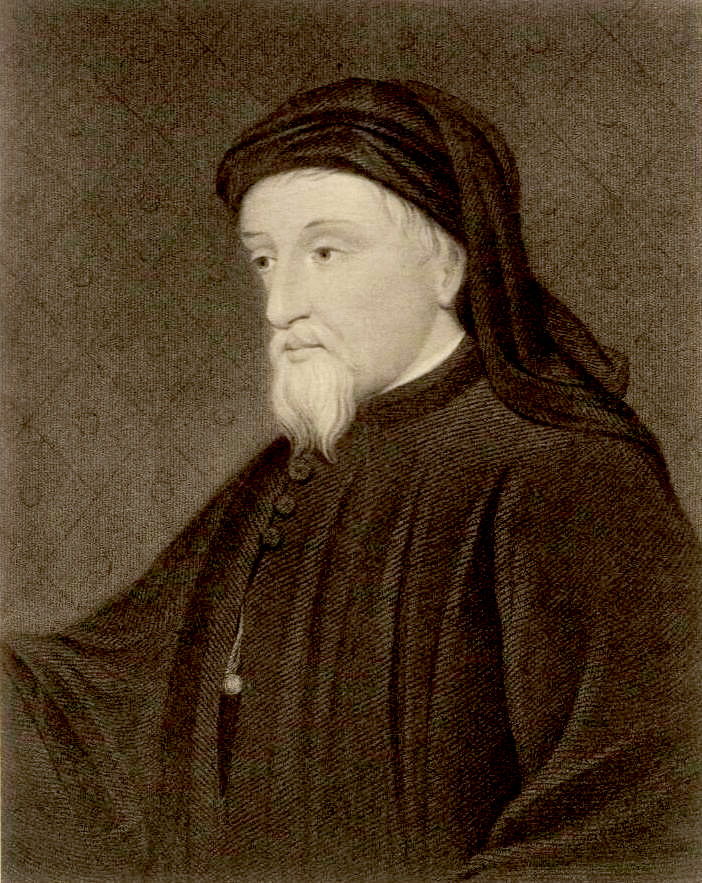
Image via Wikisource
Normally I would include text of the period pieces that inspired my poem here, but the original work is incredibly long and the inspiration was taken form a number of choice couplets throughout the work. I have instead included a link to the full poem:

